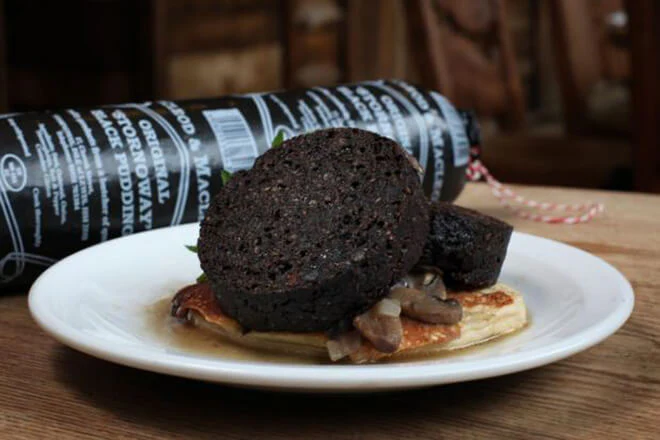
Black Pudding: A British Culinary Delight – A Brief History

iwillnotbebroken.org – Black pudding is a type of blood sausage that is a traditional ingredient in many British breakfasts, particularly in the regions of Yorkshire and Lancashire. It’s made from pig’s blood, suet, oatmeal, and various spices. While it may seem unusual to some, it’s a hearty and flavorful food that has been enjoyed for centuries.

A Brief History

The origins of black pudding can be traced back to ancient times, when blood sausages were a common way to use up animal blood. In Britain, black pudding has been a staple food for centuries, particularly among the working class. It was often eaten as a cheap and filling meal, often served with other breakfast foods like bacon, eggs, and toast.

The Making of Black Pudding

The process of making black pudding involves several steps:

  1. Blood Collection: Fresh pig’s blood is collected from a local slaughterhouse.
  2. Mixing: The blood is mixed with suet, oatmeal, and spices such as salt, pepper, and herbs.
  3. Filling: The mixture is then filled into casings, traditionally made from pig intestines.
  4. Cooking: The filled casings are cooked, often by boiling or steaming, until the blood is fully cooked.

How to Enjoy Black Pudding

Black pudding is a versatile ingredient that can be enjoyed in many ways. Here are some popular ways to eat it:

  • Fried: Slicing black pudding and frying it until crispy is a popular way to enjoy it.
  • Grilled: Grilling black pudding can add a smoky flavor.
  • Boiled: Boiling black pudding is a traditional method of cooking it.
  • As Part of a Full English Breakfast: Black pudding is often served as part of a full English breakfast, alongside bacon, eggs, sausages, and toast.

The Flavor Profile

Black pudding has a rich, savory flavor that is enhanced by the spices used in its preparation. It has a firm texture and a slightly metallic taste, which is characteristic of blood sausages. While it may seem unusual to some, many people find the flavor to be addictive.

Modern Variations

In recent years, there has been a resurgence of interest in traditional British foods, including black pudding. As a result, many chefs and food producers are experimenting with new and innovative ways to use black pudding. Some popular variations include:

  • Black Pudding and Cheese Toastie: A delicious combination of gooey cheese and savory black pudding.
  • Black Pudding and Apple Sauce: A sweet and savory pairing that is perfect for breakfast or brunch.
  • Black Pudding Pizza: A unique pizza topping that adds a savory twist.

Black pudding is a truly unique and delicious food that has been enjoyed for centuries. Whether you’re a traditionalist or a culinary adventurer, there’s no doubt that black pudding is worth trying.

The World’s Smallest Country: Vatican City

iwillnotbebroken.org – Nestled within the heart of Rome, Italy, lies the world’s smallest independent state, Vatican City. This unique city-state is not only renowned for its diminutive size but also for its profound historical, cultural, and religious significance. With an area of just 109 acres (0.44 square kilometers), Vatican City is the spiritual and administrative headquarters of the Roman Catholic Church, governed by the Pope, who serves as both its head of state and the leader of the worldwide Catholic faith.

A Brief History

The establishment of Vatican City as a sovereign entity is relatively recent, dating back to the Lateran Treaty of 1929 between the Holy See and Italy. This treaty recognized the full sovereignty of the Holy See in the international field and established the current territory of Vatican City. Despite its modern political boundaries, the history of the Vatican is deeply intertwined with the history of Christianity and the Roman Empire, with roots stretching back over two millennia.

Government and Administration

Vatican City operates under a form of absolute monarchy, with the Pope as the supreme legislator, executive, and judicial power. The governance is supported by the Roman Curia, which acts as the central body through which the Pope exercises his authority. The unique nature of Vatican City’s government reflects its primary role as a religious rather than a traditional political entity.

Cultural and Architectural Marvels

Vatican City is home to some of the world’s most renowned cultural and architectural treasures. The St. Peter’s Basilica, with its awe-inspiring dome designed by Michelangelo, stands as a testament to human artistic achievement. The Vatican Museums, housing an extensive collection of art and artifacts, including the Sistine Chapel with its famous ceiling painted by Michelangelo, attract millions of visitors each year.

Economic and Social Life

The economy of Vatican City is primarily supported by the sale of postage stamps and souvenirs, the fees for admission to museums, and the sale of publications. The city-state does not levy taxes on its residents, and its currency, the Vatican euro, is on par with the euro used by many European Union countries. Despite its small size, Vatican City has a robust social structure, providing healthcare, education, and security services to its residents.

International Relations

Vatican City maintains diplomatic relations with over 180 countries, playing a significant role in international affairs, particularly in matters concerning peace, human rights, and religious freedom. Its unique status and the moral authority of the Pope give Vatican City a voice on the global stage that far exceeds its physical size.

Conclusion

Vatican City stands as a microcosm of human achievement and spirituality. Its existence as the world’s smallest country is a testament to the enduring power of faith and the importance of cultural and historical preservation. Despite its limited geographical extent, Vatican City’s influence on the world stage is profound, making it a unique and significant entity in the global community.